Visit the enclosure of the old Monastery of Santa Marinha da Costa
Gardens of Pousada Mosteiro Guimarães
With an area of about 18 acres, the park of the Pousada Mosteiro Guimarães encompasses architectural and landscape elements within a dense and diverse vegetation cover, classified as being of public interest.
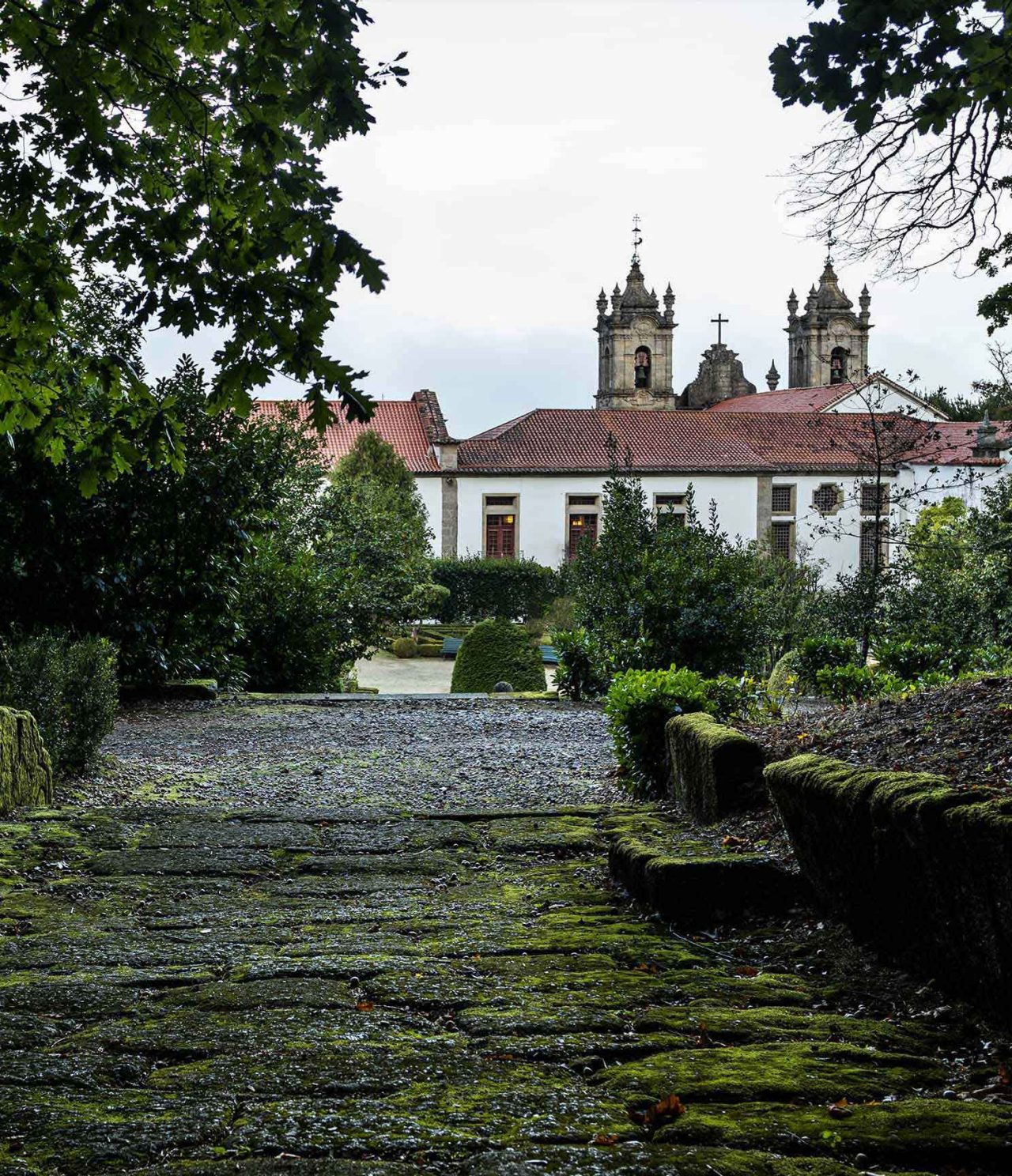
The park and gardens of Pousada Mosteiro Guimarães, make a remarkable landscape, with its origin in the enclosure of the Augustinian Monastery, founded in the twelfth century. This enclosure, formerly surrounded by a stone wall, encompassed an oak and chestnut forest, an orchard and a vegetable garden, water tanks and watermills. These were important resources to the monks of the Order of Saint Jerome, who have settled in the monastery in the sixteenth century, for whom the enclosure was also a recreation and meditation place. After the extinction of religious orders in Portugal in the nineteenth century, the property was purchased by private owners.
The park was then suited to its time, becoming a leisure place where exotic ornamental trees were introduced and a romantic artificial cave was built under a waterfall. The trees of the park were classified as being of Public Interest in 1940, however, as a consequence of the 1951 fire which partially destroyed the old monastery building, the ancient enclosure became completely abandoned. Afterwards, the property was acquired by the State and the building renovated to become a Pousada, which opened to the public in 1985. The park and garden were then recovered as a leisure place for guests and visitors.
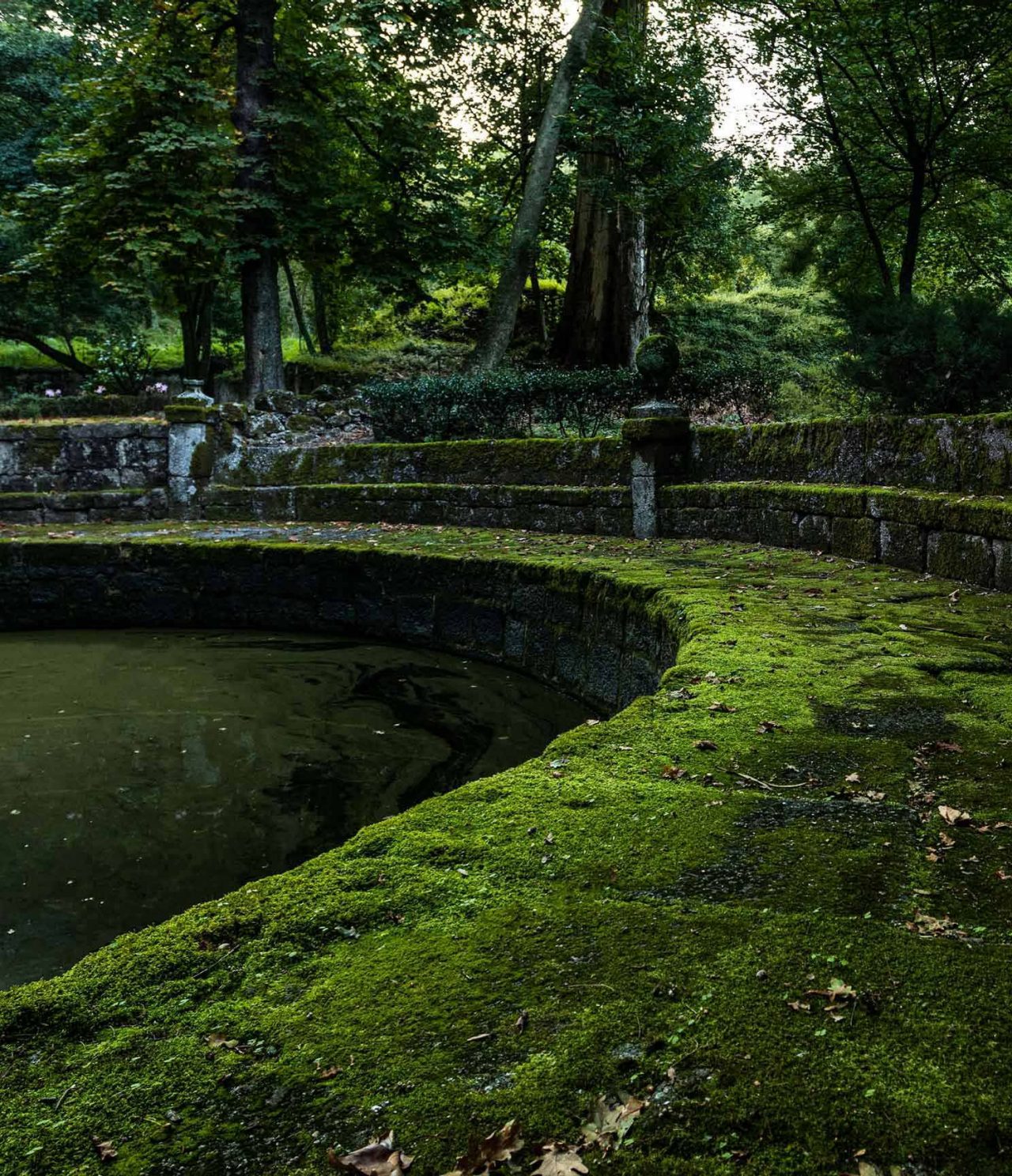
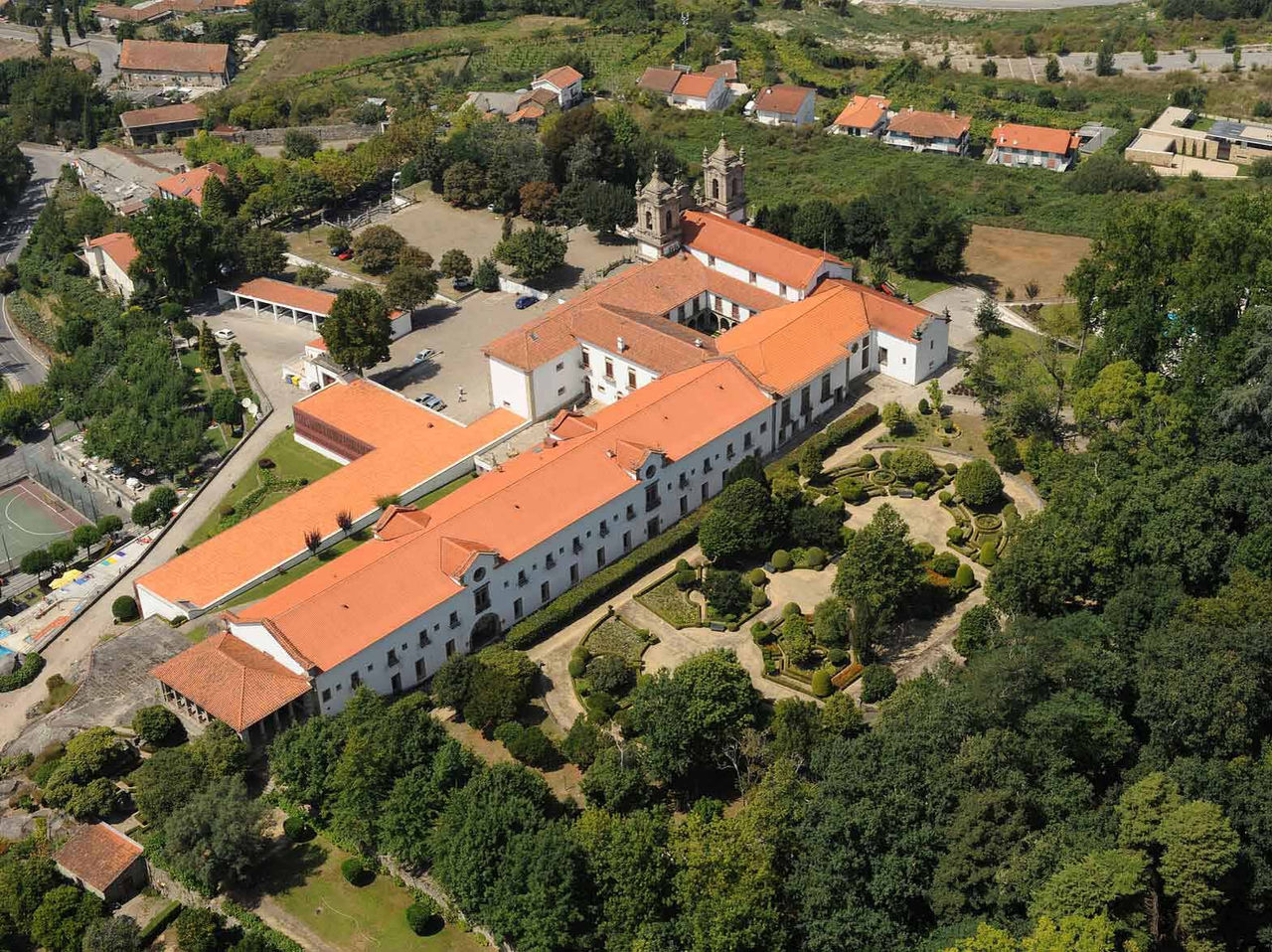
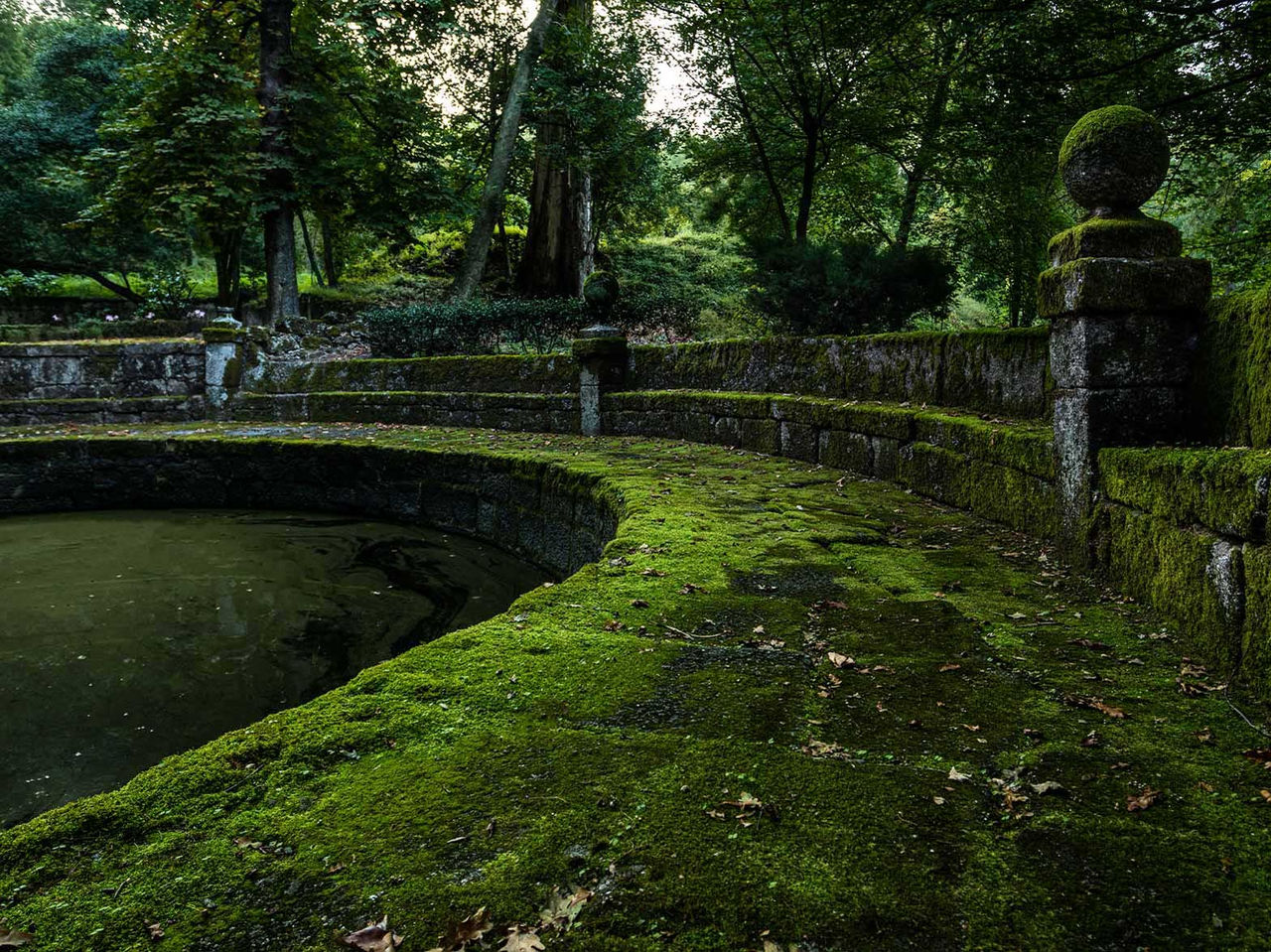
The present garden has a geometric design, with flower beds surrounded by box hedges, being separated from the Pousada by a hedge of camellias of different varieties. From the main garden, a staircase leads to a circular water tank from the baroque period, surrounded by granite seats, under the canopy of shady trees.
At each end of the garden an alley leads to the core of the park, where a wood of old oaks recalls the environment of ancient forests. Established on a hillside of Penha Mountain which shows a sharp contrast between urbanized and vegetated areas, the park of Pousada Mosteiro Guimarães remains as a distinctive place, thus deserving to be visited and protected.
Botanical Itinerary
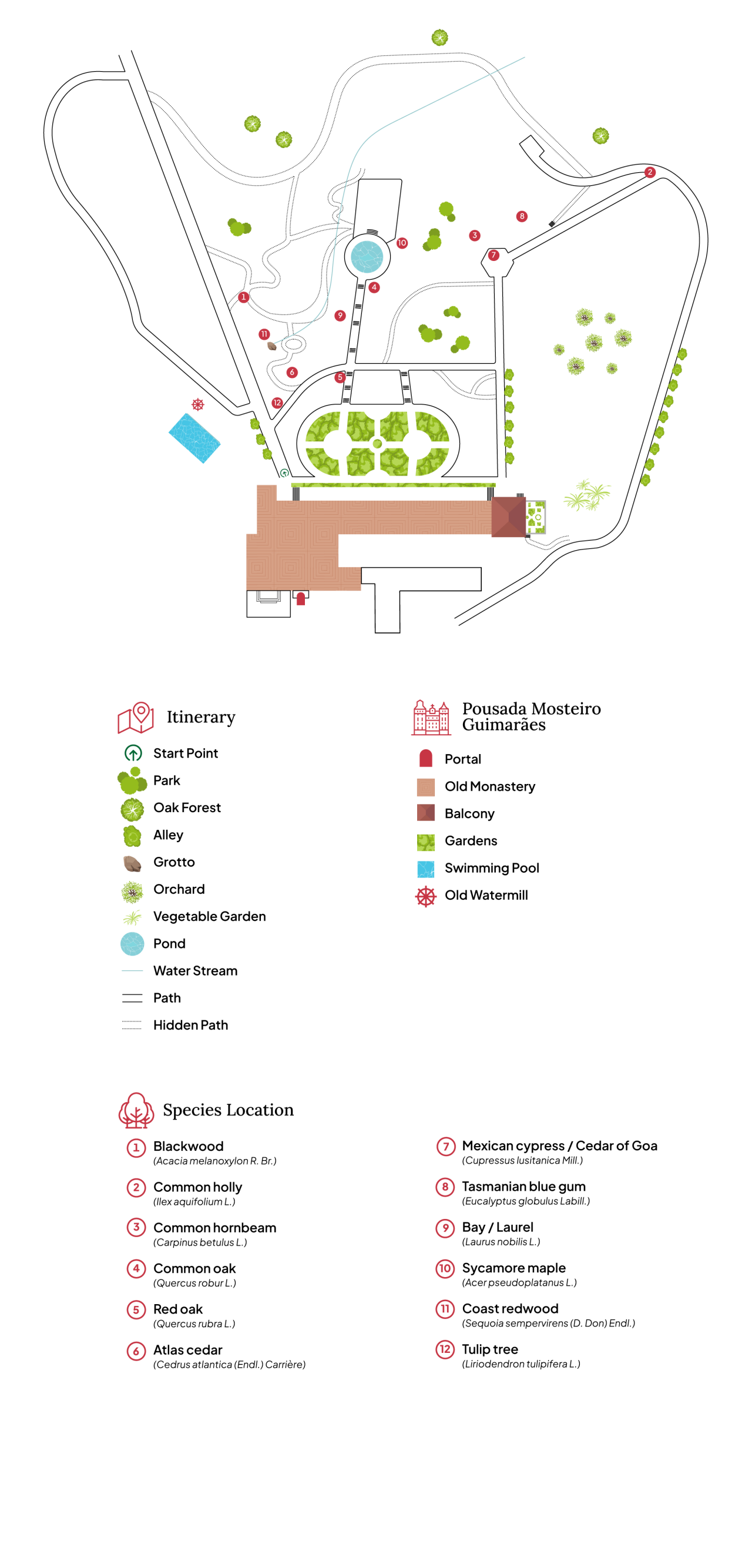
This walking tour through the park of Pousada Mosteiro Guimarães is an invitation to discover its plant diversity. Throughout the park, the visitor may find signs on 12 different tree species, whose identification and description are presented here.
A set of other species is marked on the itinerary map and can be easily recognized in the park. In every season, the visitor is called to explore the park in a renewed way, and to enjoy its tranquility.
Species Localization Map