Visit the enclosure of the old Monastery of Santa Marinha da Costa
Gardens of Pousada Mosteiro Guimarães
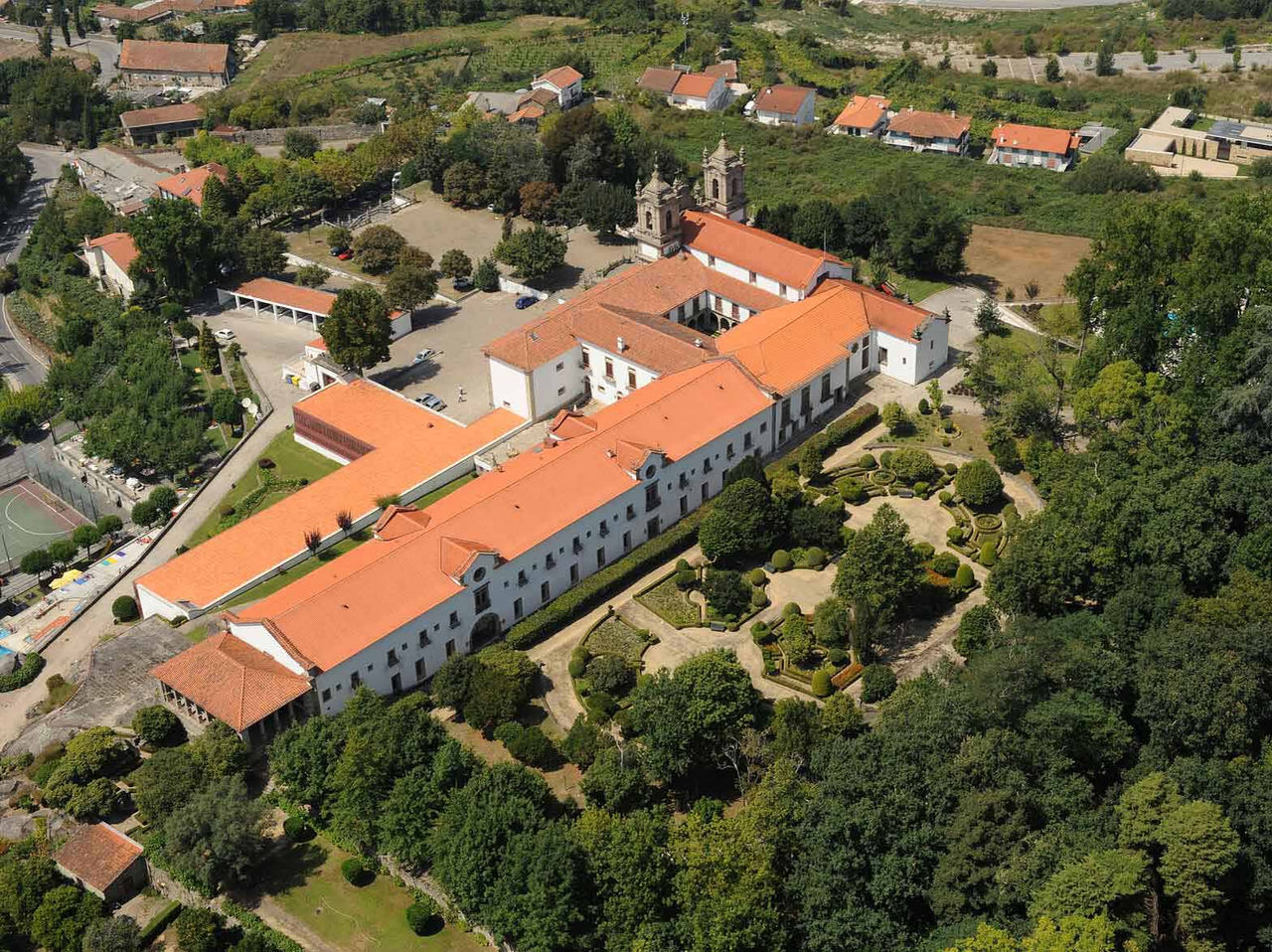
With an area of about 18 acres, the park of the Pousada Mosteiro Guimarães encompasses architectural and landscape elements within a dense and diverse vegetation cover, classified as being of public interest.
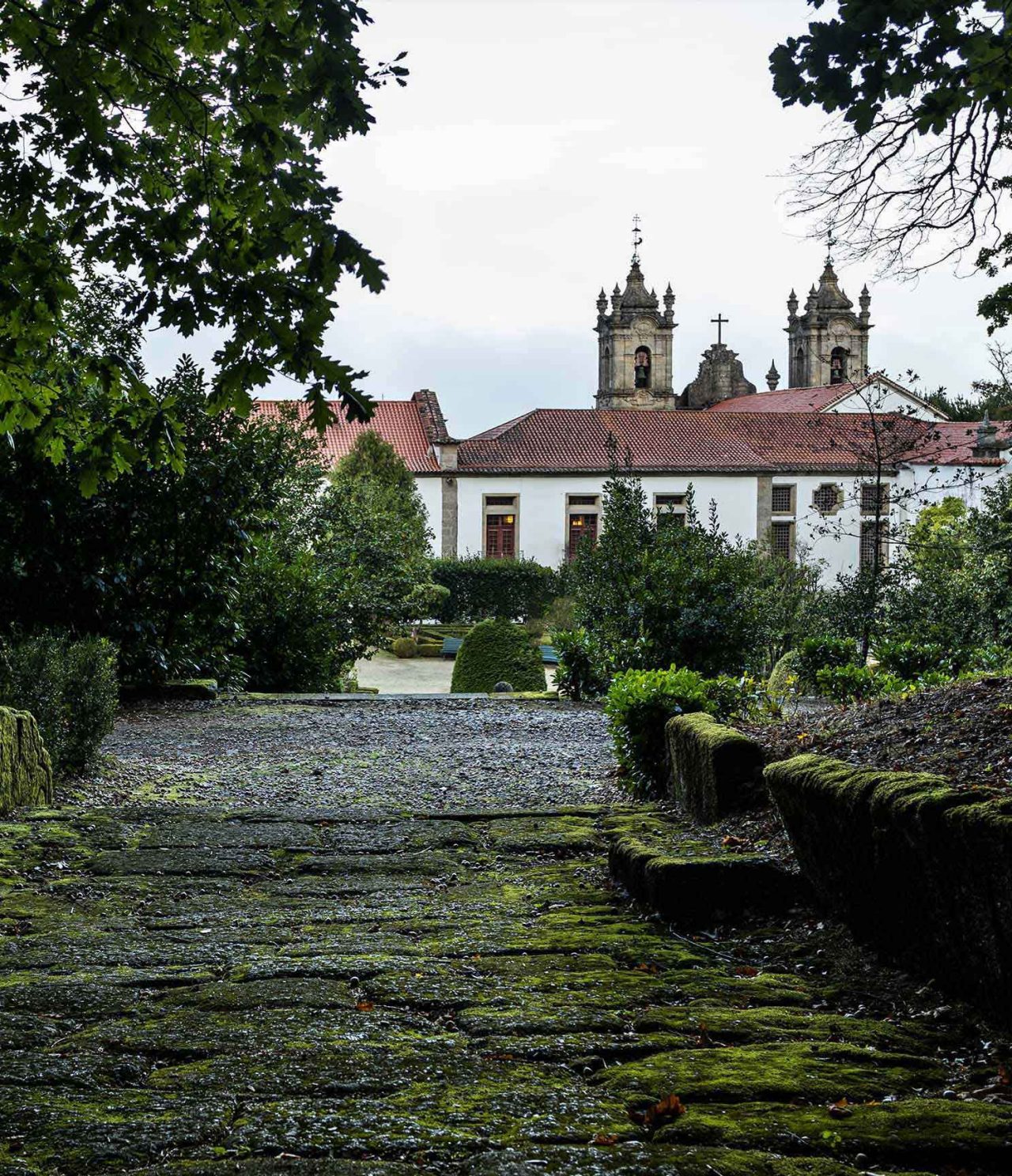
The park and gardens of Pousada Mosteiro Guimarães, make a remarkable landscape, with its origin in the enclosure of the Augustinian Monastery, founded in the twelfth century. This enclosure, formerly surrounded by a stone wall, encompassed an oak and chestnut forest, an orchard and a vegetable garden, water tanks and watermills. These were important resources to the monks of the Order of Saint Jerome, who have settled in the monastery in the sixteenth century, for whom the enclosure was also a recreation and meditation place. After the extinction of religious orders in Portugal in the nineteenth century, the property was purchased by private owners.
The park was then suited to its time, becoming a leisure place where exotic ornamental trees were introduced and a romantic artificial cave was built under a waterfall. The trees of the park were classified as being of Public Interest in 1940, however, as a consequence of the 1951 fire which partially destroyed the old monastery building, the ancient enclosure became completely abandoned. Afterwards, the property was acquired by the State and the building renovated to become a Pousada, which opened to the public in 1985. The park and garden were then recovered as a leisure place for guests and visitors.
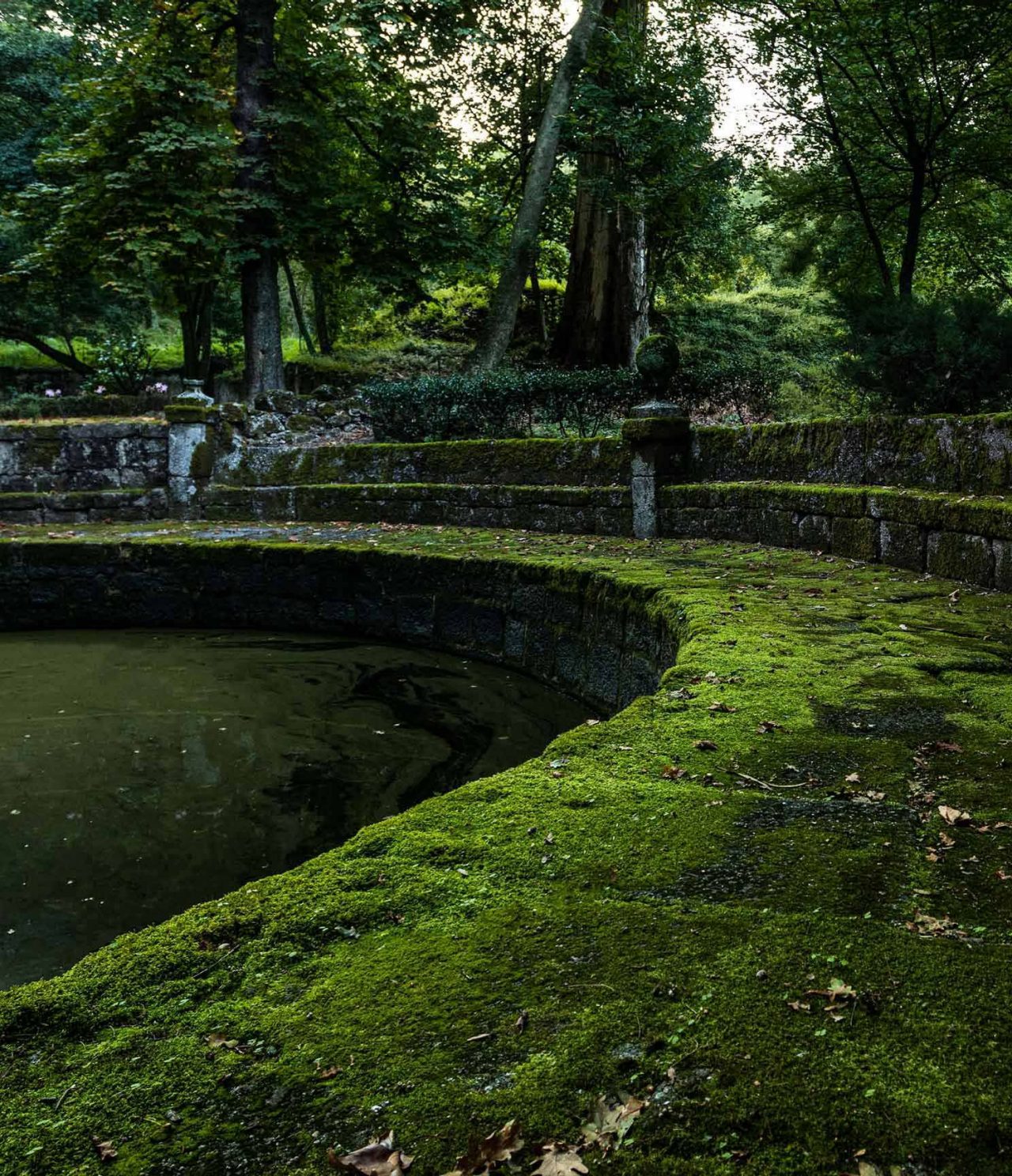
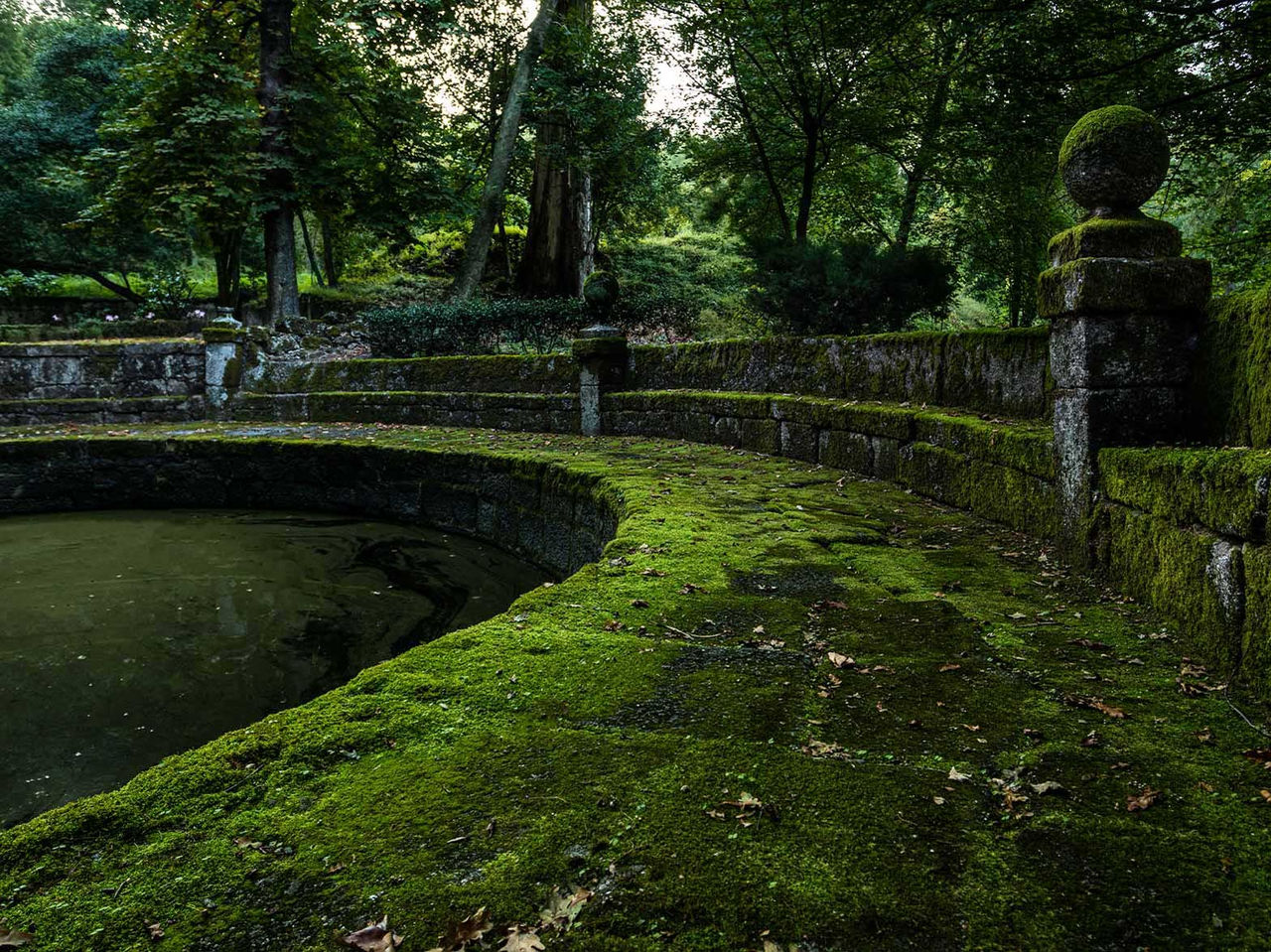
The present garden has a geometric design, with flower beds surrounded by box hedges, being separated from the Pousada by a hedge of camellias of different varieties. From the main garden, a staircase leads to a circular water tank from the baroque period, surrounded by granite seats, under the canopy of shady trees.
At each end of the garden an alley leads to the core of the park, where a wood of old oaks recalls the environment of ancient forests. Established on a hillside of Penha Mountain which shows a sharp contrast between urbanized and vegetated areas, the park of Pousada Mosteiro Guimarães remains as a distinctive place, thus deserving to be visited and protected.
Botanical Itinerary
This walking tour through the park of Pousada Mosteiro Guimarães is an invitation to discover its plant diversity. Throughout the park, the visitor may find signs on 12 different tree species, whose identification and description are presented here.
A set of other species is marked on the itinerary map and can be easily recognized in the park. In every season, the visitor is called to explore the park in a renewed way, and to enjoy its tranquility.
Species Localization Map
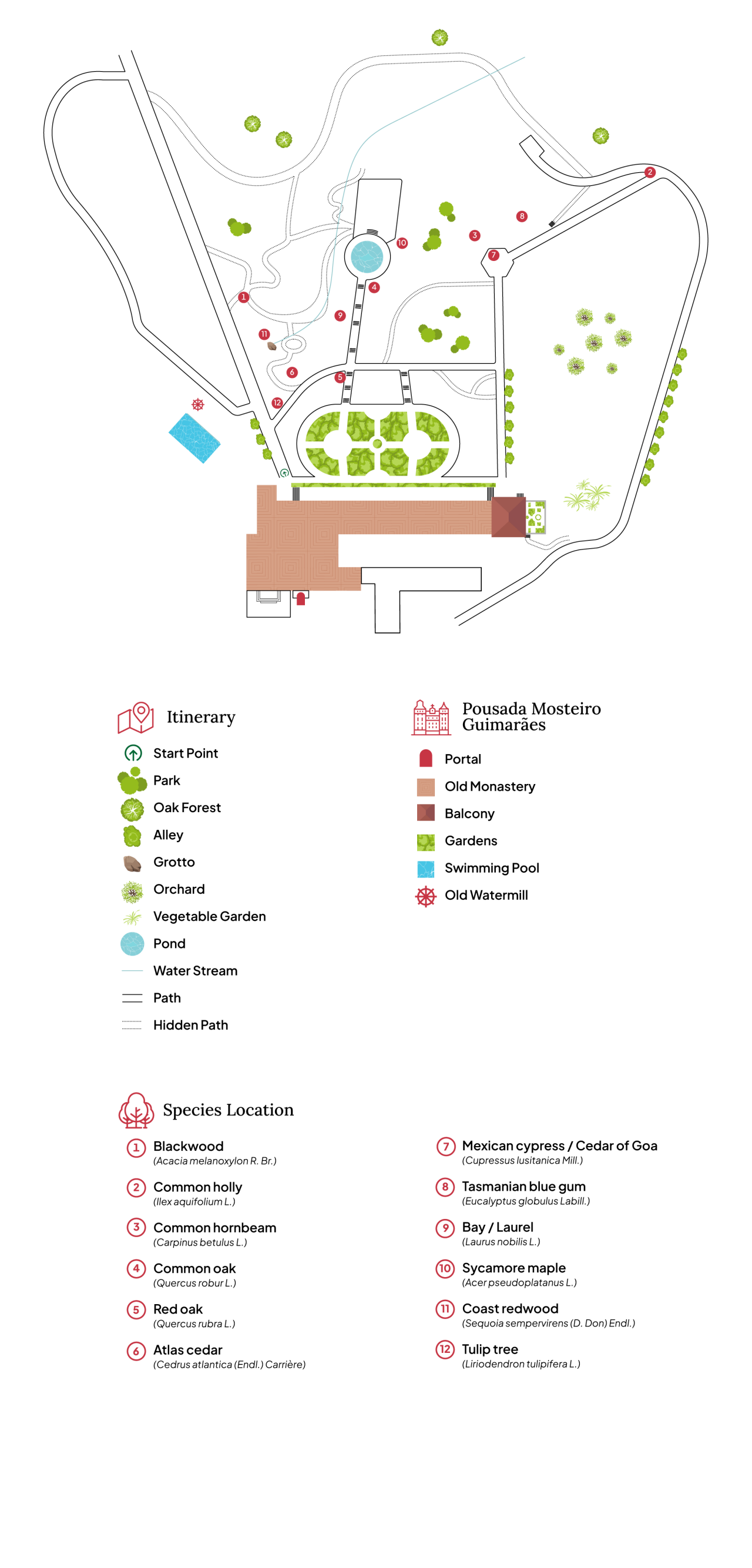
Discover 12 of the trees found in the park
Acacia melanoxylon R. Br.
Named in Portuguese after its native country (Australia), this wattle is often found in parks and gardens as a shadow tree. This particular Blackwood in the Pousada park is probably one century old, reaching over 82 feet high. Surrounding it, there are a few other younger specimens vigorously growing up.
Ilex aquifolium L.
This bush grows in the wild in oak forests of northern and central Portugal, providing shelter and food for the wild fauna. It is a vulnerable and threatened species, protected by law in Portugal since 1989. The Pousada park gathers many Holly bushes, along the alleys and in the oak wood, some of them grow up to the size of a tree.
Carpinus betulus L.
Native to Central Europe, this tree is planted in Portugal in parks and gardens. Its fruits are in hanging catkins at the end of branches, with an ornamental effect. In the Pousada park, this leafy specimen is nearly 98 feet high.
Quercus robur L.
This long-lived, sturdy tree is native to the forests of northern and central Portugal. In the Pousada park, the remnant oak wood shelters a remarkable biological diversity. This specimen is some centuries old, overshadowing the round water tank with its large canopy.
Quercus rubra L.
Native to eastern North America, this tree was introduced in Portugal due to its exquisite wood. It is planted in parks and gardens because of its beautiful autumn red leaves. In the Pousada garden this specimen is over 65 feet high.
Cedrus atlantica (Endl.) Carrière
With its origin in the Atlas Mountains, in Morocco and Algeria, it was brought to the Portuguese and Spanish parks and gardens as an ornamental tree. Its leaves are short needles and its cones disassemble when mature. This specimen, with 131 feet high, is one of the higher trees in the park.
Cupressus lusitanica Mill.
Native to Mexico, it was introduced in Portugal in the Buçaco enclosed forest, in the XVII century, and afterwards disseminated as an ornamental tree. Its botanical name resulted from a mistake regarding its origin. This specimen is over 98 feet high and its leaves, reduced to small scales, cover the end of the branches.
Eucalyptus globulus Labill.
The austral giant that conquered Portugal is native to Tasmania and it arrived in Europe at the beginning of the nineteenth century. This monumental specimen is the largest tree in the Pousada park, reaching 164 feet high and having a 19 feet circumference at the base. Adult leaves are different from the young foliage and its bark peels off in long strips.
Laurus nobilis L.
This is the victory tree, indispensable in Mediterranean cuisine. Wreaths made from its spear-shaped leaves crowned heroes and poets in the classical ancient world. It is a common species in the Pousada park, and this specimen grew up to the size of a tree.
Acer pseudoplatanus L.
Native to Central and Southern Europe, it is often cultivated as an ornamental tree, with several varieties obtained from nurseries. Its leaves are similar to those of the London Plane (Platanus x hispanica), but its fruits develop in pairs, with membranous wings. This specimen is over 65 feet high.
Sequoia sempervirens (D. Don) Endl.
Native to the Pacific coast in North America, this species claims to be the tallest tree in the world, sometimes exceeding 330 feet high in its natural habitat. In Portugal it is cultivated in parks and gardens as an ornamental tree. This specimen in the Pousada park is still a young tree, reaching 98 feet high.
Liriodendron tulipifera L.
Native to eastern North America, this tree has showy flowers suggesting tulips and leaves with an uncommon silhouette. In the Pousada park, this specimen with 147 feet high belongs to a group of splendid tulip trees, surrounding the romantic grotto.